When church leaders from around the world gather, one reality becomes immediately clear:
the gospel is one—but the languages are many.
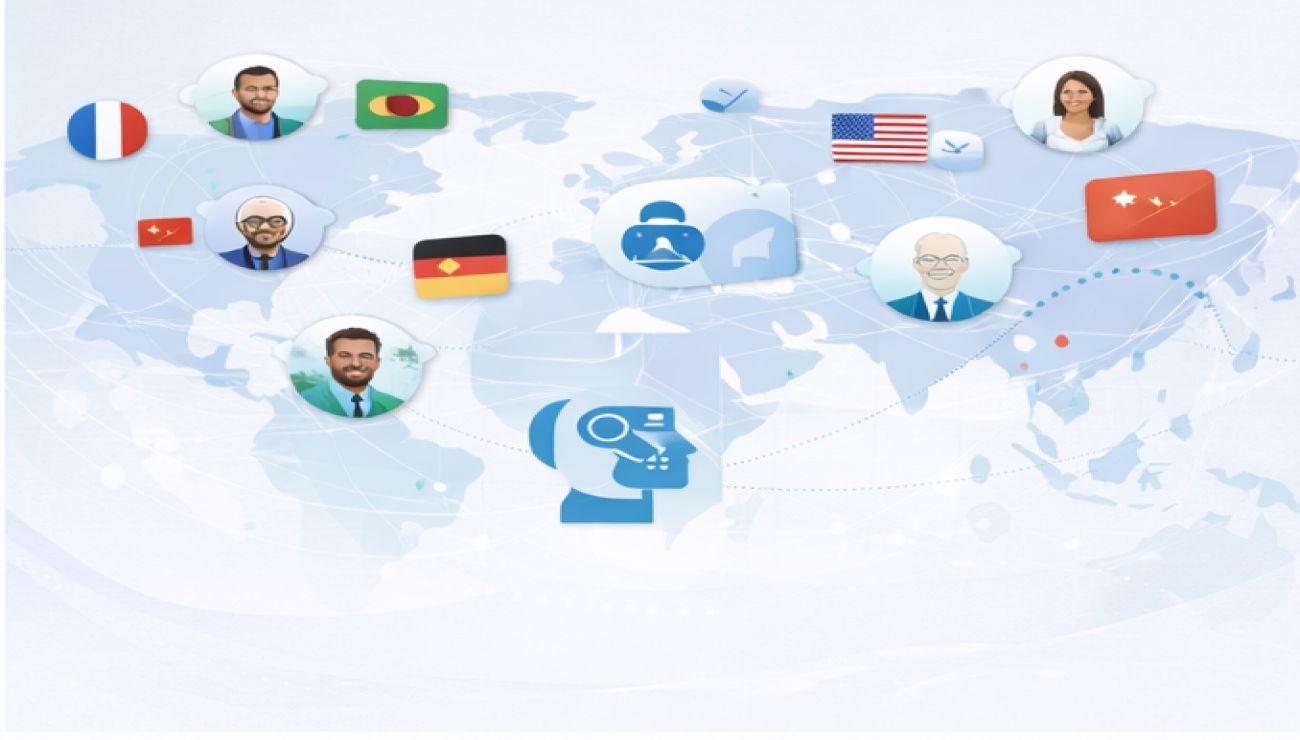
At the upcoming convention of the Confessional Evangelical Lutheran Conference (CELC), that reality will be on full display. Pastors, missionaries, and leaders representing dozens of countries will come together for worship, study, and fellowship—all united in confession, yet diverse in language.
This year, something new is being introduced alongside that gathering:
Live, multilingual translation powered by AI.
A Global Church, A Real Challenge
The CELC exists to bring together Confessional Lutheran church bodies from across the globe. This means participants often speak:
- English
- Spanish
- German
- French
- and many other regional languages
Historically, this has required:
- Human interpreters
- Limited language channels
- Or dependence on a single shared language
While effective, these approaches come with limitations—especially as the global Church continues to grow.
The challenge is not new. It echoes the tension first seen at Babel:
how can one message be clearly heard across many languages?
A Step Toward Pentecost-Like Communication
At the CELC convention, live translation technology is being introduced to address that challenge in a new way.
Using real-time AI translation:
- A speaker can teach in one language
- Participants can hear or read the message in their own language
- Multiple languages can be supported simultaneously
- No additional human interpreters are required for every language
This does not eliminate language diversity.
Instead, it bridges it—allowing the gospel to be understood across linguistic boundaries.
In many ways, this reflects the pattern of Pentecost:
not one language imposed on all, but one message made accessible to each.
How It Works
During convention sessions:
- Audio from the speaker is captured live
- AI systems transcribe and translate the message in real time
- Participants select their preferred language on a device
- They receive either translated audio or live captions
The result is a shared experience:
leaders from different nations hearing the same teaching—each in their own language.
Why This Matters
This development is not primarily about technology.
It is about access to the Word of God.
Clear communication is essential for:
- Faithful teaching
- Doctrinal unity
- Meaningful theological discussion
By reducing language barriers, the convention allows:
- More leaders to fully participate
- Greater clarity in theological exchange
- Stronger unity rooted in shared understanding
It also opens the door for broader inclusion—especially for leaders who may not be fluent in a major conference language.
A Glimpse of What Is Coming
The use of live translation at the CELC convention is more than a one-time enhancement.
It is a preview of a broader direction.
This same approach is being developed within the Lutheran Leader’s Companion platform, where:
- Live multilingual courses
- Global leader collaboration
- Cross-language theological discussion
will become a regular part of ministry life.
What is being tested at CELC is what will eventually be accessible anywhere.
Continuity with the Church’s Mission
The Church has always made use of the tools available to carry the gospel further:
- The Roman road system enabled early mission work
- The printing press allowed Scripture to reach the laity
- Radio and digital media expanded global outreach
Live translation technology is another such tool.
It does not replace the work of the Holy Spirit.
It serves it—by helping ensure that the Word is heard and understood.
One Gospel, Many Voices
At the CELC convention, leaders will gather from around the world, confessing the same faith.
Now, with live translation:
- The sermon proclaimed in one language
- The teaching delivered from one text
- The gospel announced in one voice
can be heard clearly by many.
One Gospel. Every Language.
What began at Pentecost continues today.
Not through the removal of languages,
but through the faithful proclamation of the Word—
carried across every barrier,
so that all may hear, believe, and confess.
0 Comments